 Skip-the-line available
 What to See at the Château du Clos Lucé
Leonardo's private rooms, the underground galleries and the seven-hectare park of full-scale invention models.
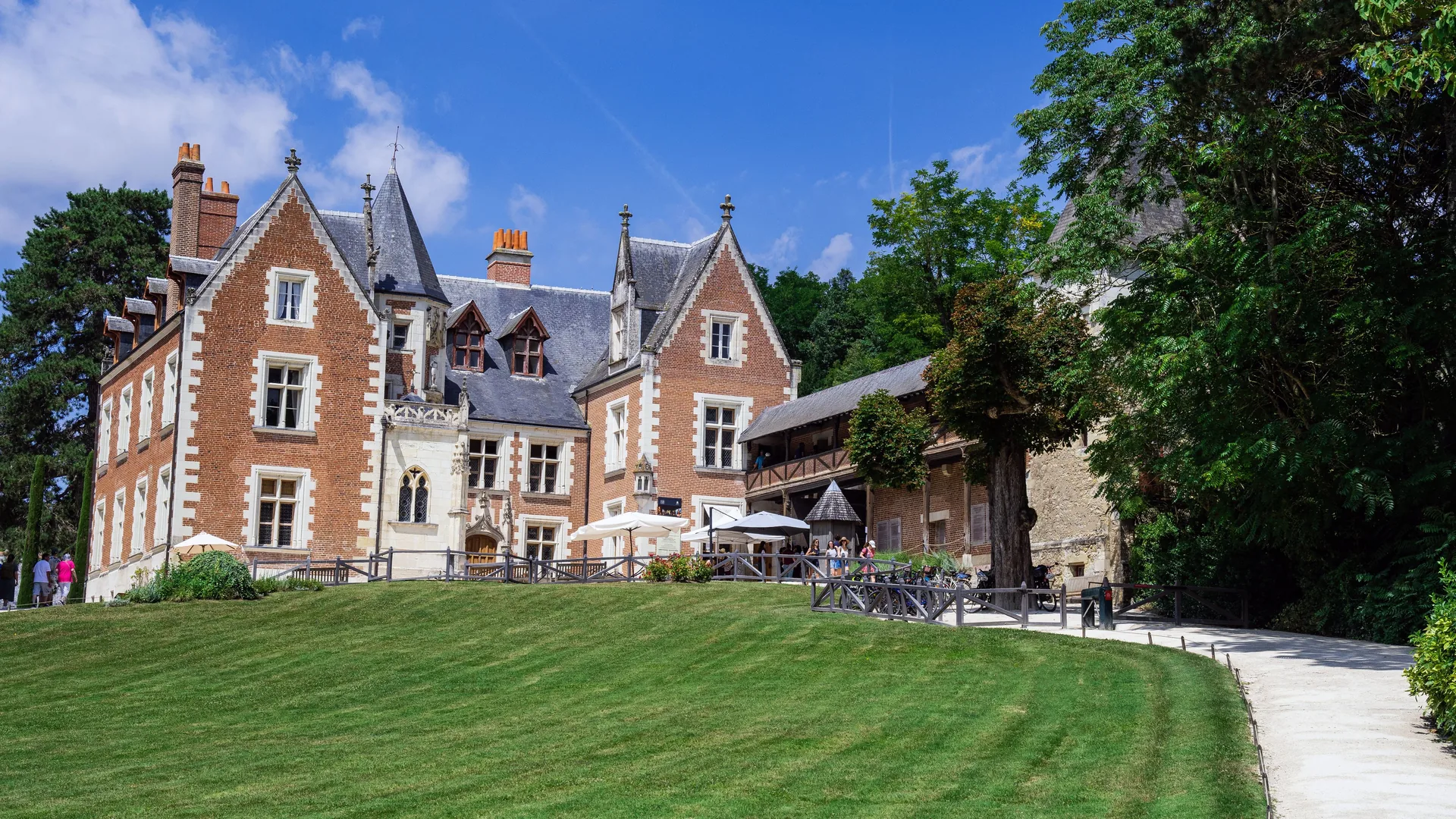
Clos Lucé packs three distinct experiences into one ticket: the Renaissance rooms where Leonardo actually lived and died, an underground gallery beneath the house, and a seven-hectare park where full-scale models of his inventions — built from his own notebook sketches — stand ready to be climbed on and turned. It's the most hands-on visit of any Loire château, and knowing what's where helps you use your 1.5 to 3 hours well. This guide walks through each part of the site.
Leonardo's Rooms — Where He Lived and Died
The heart of the house is the set of Renaissance rooms restored to evoke how Leonardo knew them during his three years here: his bedchamber, where he died on 2 May 1519, and his studio, where he worked on projects for King François I — including designs connected to the double spiral staircase at Château de Chambord and plans for the never-built city of Romorantin. Walking through rooms with a specific, dated death attached to them gives the house a directness that few historic residences manage; this is not a recreation of 'a' Renaissance scholar's home, but the actual rooms of a specific three-year tenancy that ended in a specific bed.
Elsewhere in the house, murals by Leonardo's students and other Renaissance-era rooms fill out the picture of daily life at Clos Lucé under François I's patronage — Leonardo arrived in 1516 at the king's invitation, at 64 years old, having crossed the Alps with sketchbooks and three of his most famous paintings, including the Mona Lisa, in his luggage.
The Underground Galleries
Beneath the house, the underground gallery displays around 40 models of Leonardo's machines and mechanisms, built from his notebook drawings — everything from a helicopter-like aerial screw to mechanical devices for construction, warfare and everyday use. Seeing these models in sequence, in the more intimate scale of an indoor gallery, is the best way to appreciate the sheer range of Leonardo's engineering imagination beyond the handful of famous inventions most visitors already know.
The galleries also house murals and additional exhibition space exploring Leonardo as painter and architect, rounding out the more purely mechanical focus of the outdoor park. Together with the house upstairs, this is the indoor half of the visit — the natural wet-weather fallback if the forecast turns while you're there.
The Seven-Hectare Machine Park
Outside, an English-style landscaped park holds a cultural trail of full-scale, working models of Leonardo's inventions, built from his own sketches — around 20 giant machines set among the trees and lawns, including the armoured tank, the aerial screw, a multi-barrelled gun and a revolving bridge. Unlike a museum case, most of these are built to be used: visitors can climb aboard the tank, work the aerial screw and cross the revolving bridge themselves, which is what makes the park genuinely different from any other château garden in the Loire.
Sound terminals stand beside each machine, explaining what it was for and how Leonardo arrived at the design, and a free augmented-reality app brings several of the structures to life on your phone, showing them in motion. Given the outdoor setting, dry weather makes a real difference here — see the seasonal guide for the best months and times of day to catch the park at its calmest and driest.
Frequently asked
What inventions can I actually see at Clos Lucé?
The park holds around 20 full-scale models built from Leonardo's notebook sketches, including the armoured tank, the aerial screw (an early helicopter concept), a multi-barrelled gun and a revolving bridge — most of which visitors can climb on or operate. The underground gallery adds around 40 further models covering his wider engineering work.
Can I actually touch or use the machines?
Yes — that's what sets Clos Lucé apart from most château visits. Many of the park's full-scale models are built to be climbed aboard or worked by hand, such as the tank and the aerial screw, rather than kept behind glass.
Is Leonardo's actual bedroom on display?
Yes. His restored bedchamber, where he died on 2 May 1519, is part of the house visit, along with the studio where he worked during his three years at Clos Lucé.
What's in the underground gallery?
Around 40 models of Leonardo's machines and mechanisms, built from his notebook drawings, along with murals and further exhibition space on his work as painter and architect — the indoor complement to the outdoor park.
Is there an app or audio guide for the machines?
Yes, a free augmented-reality app shows several of the park's structures in motion, and sound terminals beside each machine explain what it was designed to do.